LINKS
References:
There are about 1,000 articles and over
100 studies on NET/CES therapy. I have not the space or the time to
list them all. You can find lots of them on the internet. I have
provided a few of the most important ones below.
The ten best pages ever written about NET are these by the sons of Meg Patterson. You must read this study if nothing else:
Dr. Meg Patterson's work with NET:
Patterson MA. Effects of NeuroElectric
Therapy (NET) in drug addiction: an
interim report. UN Bull Narc 1976;28:55-62.
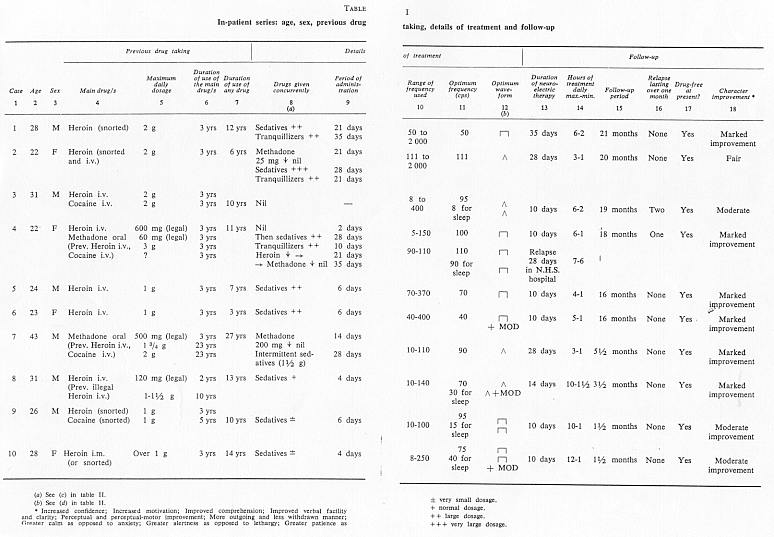
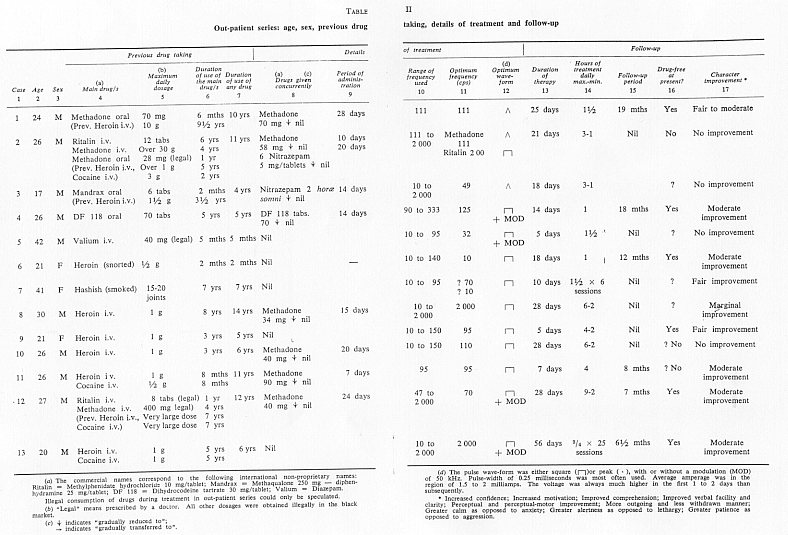
These two pages show the importance
of different frequencies with various patients who took various drugs
in varying amounts in one of Meg Patterson's studies. Here and here
Probably the best book she wrote is: Hooked? Net: The New Approach to Drug Cure You can usually find used copies of this for less than $10 at Abe books. She has written several other books as well..
More recent research:
This is a study using CES/NET to help cure people on Methadone. They only used it for one hour each day during the week and half were off Methadone within two weeks. This is quite useful for determining a treatment protocol.
Here is a page from a Fibromyalgia support group containing dozens of studies and links mainly focusing towards that disease and the pain associated with it.
A
‘Common Anti-Addiction Mechanism’:NeuroElectric Therapy
in Drug Treatment
Lorne Patterson, RMN Sean Patterson PhD (Cam)
Here is a mixed bag including NET and Electro acupuncture studies: http://www.skepticfiles.org/md001/acudetox.htm
Here is another list of links http://www.eegbiofeedback.cz/e-stim/cesky/studie/08_Addiction.htm
Also here are some interesting and pertinent studies that you may find interesting.
Suppression of morphine withdrawal by electroacupuncture in rats: dynorphin and kappa-opioid receptor implicated.
Wu LZ, Cui CL, Tian JB, Ji D, Han JS.
Neuroscience Research Institute, Beijing Medical University, China.
Our previous work has demonstrated that 100-Hz electroacupuncture (EA) or 100-Hz transcutaneous electrical nerve stimulation (TENS) was very effective in ameliorating the morphine withdrawal syndrome in rats and humans. The mechanism was obscure. (1) Rats were made dependent on morphine by repeated morphine injections (5-140 mg/kg, s.c., twice a day) for eight days. They were then given 100-Hz EA for 30 min 24 h after the last injection of morphine. A marked increase in tail flick latency (TFL) was observed. This effect of 100-Hz EA could be blocked by naloxone (NX) at 20 mg/kg, but not at 1 mg/kg, suggesting that 100-Hz EA-induced analgesia observed in morphine-dependent rats is mediated by kappa-opioid receptors. (2) A significant decrease of the concentration of dynorphin A (1-17) immunoreactivity (-ir) was observed in the spinal perfusate in morphine-dependent rats, that could be brought back to normal level by 100-Hz EA. (3) 100-Hz EA was very effective in suppressing NX-precipitated morphine withdrawal syndrome. This effect of EA could be prevented by intrathecal administration of nor-BNI (2.5 micrograms/20 microliters), a kappa-opioid receptor antagonist, or dynorphin A (1-13) antibodies (25 micrograms/20 microliters) administered 10 min prior to EA. In conclusion, while the steady-state spinal dynorphin release is low in morphine-dependent rats, it can be activated by 100-Hz EA stimulation, which may be responsible for eliciting an analgesic effect and ameliorating morphine withdrawal syndrome, most probably via interacting with kappa-opioid receptor at spinal level.
This study shows that electrical stimulation increases the potency of opiates. Up to 3 fold in the case of morphine (and they were not even using the best endorphin frequency).
"The main property of TCES is to potentiate some drug effects, especially opiates and neuroleptics, during anesthetic clinical procedures. This potentiation effect permits drastic reduction of pharmacological anesthetic agent and reduces post-operative complications." -Transcutaneous cranial electrical stimulation (TCES): a review 1998.
"Indications and Usage: In carefully conducted randomized controlled trials CES has repeatedly shown efficacy in treating mild to moderate primary or secondary anxiety and depressive conditions, normalization of central hemodynamics (systolic and diastolic blood pressure but not peripheral vascular tension) in Stage I hypertension, relieving headache pain (85%) and other types of pain conditions including pain resulting from dental surgery and cancer (35%), and especially in potentiating through centrally-mediated action the effect of analgesic drugs (fentanyl 176%-306%, morphine 174%-306%, alfentanil I 60%-2 15% and dextromoramide 267%-392%), or replacing them altogether and increasing the depth of anesthesia (In one study fentanyl use decreased by 31%.). and increasing attention and the ability to learn new tasks. To a lesser degree CES has been shown effective in relieving primary insomnia (particularly sleep-onset insomnia), mild depression, post-axonic spasticity, minimal brain dysfunction and mood changes subsequent to closed head injury (with corresponding decrease in the need to neuroleptic drugs). Efficacy of CES has been researched in regards to substance abuse recovery (including nicotine and opiate addiction) with mixed results." -CES for neurotransmitter balancing, mood control, IQ gains, sleep, exploration of altered states, peak performance, and much more.
Methadone
This study showed that CES controlled (lessened) Methodone withdrawals. And almost nothing else does that.
Opiate Abuse
16. Gold, M.S., Pottash, A.L.C., Sternbach, H., Barbaban, J., and Annitto, W. Antiwithdrawal effects of alpha methyl dopa and cranial electrotherapy. Paper presented at Society for Neuroscience. 12th Annual Meeting, October, 1982.
Device not specified.
Chronic opiate user inpatients were randomized for this double-blind study and given either alpha methyl dopa (Aldomet) or placebo Aldomet 48 hours after abruptly removing methadone, or CES or placebo CES. Aldomet and CES were both effective in controlling the effects of acute withdrawal. CES was also effective in controlling the effects of protracted withdrawal. No placebo condition was effective. The authors theorized that CES was effective by stimulating -endorphin, which inhibited the noradrenaline activity at the locus ceruleus. No side effects were reported.
Again a study showing that CES lessened withdrawl symptoms in Heroin addicts undergoing Methadone detox. Again our Brainmax uses 96 Hz for this and is 2-3 times as effective for endorphins (and withdrawals) as the 100 Hz is that they used in this study.
17. Gomez, Evaristo and Mikhail, Adib R. Treatment of methadone withdrawal with cerebral electrotherapy (electrosleep). British Journal of Psychiatry (London). 134:111113, 1979. Also in Gomez, Evaristo and Mikhail, Adib R. Treatment of methadone withdrawal with cerebral electrotherapy (electrosleep). Paper presented at the annual meeting of the American Psychiatric Association, Detroit, 1974.
Device: 100 Hz, 2 mS, 0.4 - 1.3 mA, electrodes from the forehead to mastoids
For this single blind study, 28 male heroin addicts, between 18 and 60 years old, undergoing methadone detoxification were selected on the basis of having severe anxiety as measured by the Hamilton Anxiety Scale and Taylor Manifest Anxiety Scale, difficulties in sleeping, willingness to participate in the study for at least 2 weeks in a locked ward, and agreement not to take any tranquilizers or hypnotics while in the study. This was a self medicated withdrawal study in which methadone was given as requested by the patients as needed to control their withdrawal symptoms. The pts were then randomly divided into a CES treatment group (N = 14) who were taking 20 - 60 mg of methadone/day, a placebo group (N = 7) taking 30 to 40 mg/day, and a waiting in line control group (N = 7) taking 25 - 40 mg/day. CES or sham CES was given for 10 days, Monday through Friday, 30 minutes per day. After 6 - 8 CES treatments, methadone intake was 0 in 9 pts, with another 1 at 0 after 10 treatments. 3 were taking 10 - 15 mg after the 10 treatments. The other active pt dropped out of the study after the first treatment. The pts reported feeling restful and having a general feeling of well-being, their sleep was good and undisturbed after 3 treatments. The Taylor Manifest Anxiety Scale scores also came down significantly in the CES group with 7 pts dropping from a mean of 31 before CES to 20 after 10 days (normal is 8 - 18), while the others showed a 25 - 50% reduction. Sham CES pts showed an insignificant change in the mean TMAS scores from 29 to 27. The methadone intake did not change in 4 sham CES pts, and only dropped 5 - 10 mg in the other 3. These pts were anxious and depressed, and complained of difficulty sleeping and somatic problems. The 7 controls also did not do well, TMAS scores increased in 2 cases, was the same in 1, and only decreased 1 - 2 points after 10 days in the remainder. The methadone intake was the same in 3 controls, and decreased in the other 4 after 10 days. These pts were anxious, had difficulty sleeping. HAS scores were also diminished in the CES group but not the placebo or controls. It was noted that with a higher current, the pt felt uncomfortable, but there were no skin burns.
Here is a study that was done on people with lots of problems including addiction, depression and sleep disorders. They did not have the right frequencies to get spectacular results.
31. Magora, F., Beller, A., Assael, M.I., Askenazi, A. Some aspects of electrical sleep and its therapeutic value. In Wageneder, F.M. and St. Schuy (Eds). Electrotherapeutic Sleep and Electroanaesthesia. Excerpta Medica Foundation, International Congress Series No. 136. Amsterdam, Pages 129-135, 1967.
Device: 30 - 40 Hz, 2 mS, 2 mA, forehead to occipital fossa electrodes
20 hospitalized pts suffering from long-lasting insomnia with anxiety, obsessive and compulsive reactions, morphine and barbiturate addiction and involutional depression were given 2 - 4 CES treatments weekly for 2 - 3 hours a day for a total of 10 - 20 treatments. 5 of the 20 showed no improvement, 11 had sedative effects, and 4 had hypnotic effects. The 15 responders all had normal restoration of their sleep rhythm as measured by EEG. Parallel with the return to a normal sleep pattern, all the other psychiatric signs: anxiety, depression, agitation, delusions, abstinence syndrome, improved so that all these pts were able to leave the hospital. Follow-up has continued for 8 - 12 months after treatment and has revealed no relapse.
Also 9 children (aged 5 - 15 years) suffering from severe, long-lasting bronchial asthma, resistant to conventional treatment, including steroids, were given 3 - 24 (Av. 15) CES treatments once a week for 1 - 2 hours. The asthmatic attacks stopped completely in 3 children and 4 months later the children felt well without taking any drugs. 2 children showed objective improvement, no wheezes were found on examination and, the frequency and severity of wheezing spells were diminished. 1 child showed slight improvement, 2 did not respond at all. None suffered an asthmatic attack for 24 hours following CES. Placebo conditions did not cause any improvement. The authors concluded that it appears that CES may be an adjunct to the treatment of asthma in children. Because of the selection for trial of the most severe cases available to us, resistant to any other known treatment, even slight results are encouraging. It was also noted that no ill-effects were noted on prolonged and repeated observations in dogs and in humans.
This study is one done on the potentiation of Opiates by CES. It's 'the effects of transcranial electrical stimulation on opiate-induced analgesia in rats'.
Kabalak AA, Senel OO, Gogus N.
Department of Anaesthesiology and Reanimation, Ankara Numune Research and Training Hospital, Turkey. drayla2002@yahoo.com
BACKGROUND AND OBJECTIVES: Recent experiments have shown that transcranial electrical stimulation significantly increases the potency and duration of the analgesic effects of opioids in humans and rats. In the present study, the influence of transcranial electrical stimulation (TCES) on the analgesic effect of remifentanil hydrochloride (HCl) in rats was determined. METHODS: Experiments were performed on 80 albino male Wistar rats. Rats were randomly assigned to four groups: remifentanil HCl, remifentanil HCl and TCES, TCES, and control (n=20/group). Remifentanil HCl was injected on the 55th minute. Analgesia was assessed using the wet tail-flick latency test. RESULTS: In the remifentanil HCl group, analgesia (10.85+/-1.04 s) was reached at the fifth minute, and the analgesia was high for the first 10 min. In the remifentanil HCl and TCES group, the latency time peaked (16.60+/-1.19 s) at the fifth minute. This peak was 150% higher than that for the remifentanil HCl group, and 251% higher than the control or TCES groups. Analgesia in the remifentanil HCl and TCES group was sustained for 20 min at a statistically higher rate than the other treatment groups (P<0.001). CONCLUSIONS: TCES markedly increased the duration and analgesic potency of remifentanil HCl in rats. This effect appeared to be related to the release of enkephalins from brain structures, thus enhancing opioid analgesia.
This study shows the potentiation of opiates by CES.
Transcranial electrical stimulation with high frequency intermittent current (Limoge's) potentiates opiate-induced analgesia: blind studies.
Author: Stinus, L : Auriacombe, M : Tignol, J : Limoge, A : Le Moal, M
Citation: Pain. 1990 Sep; 42(3): 351-63
Abstract: Transcutaneous cranial electrical stimulation (TCES) with high frequency (166 kHz) intermittent current (100 Hz: Limoge current) has been used for several years in cardiac, thoracic, abdominal, urological and micro-surgery. The main benefits are a reduced requirement for analgesic drugs, especially opiates, and a long-lasting postoperative analgesia. We have confirmed these clinical observations in rats using the tail-flick latency (TFL) test to measure pain threshold. TCES was not found to modify the pain threshold in drug-free rats, but it potentiated morphine-induced analgesia (systemic injection). To obtain a maximal effect, the stimulation must be initiated 3 h before the drug injection and be maintained throughout the duration of its pharmacological action. TCES potentitation was found to depend on the dose of the drug, the intensity of the current and the polarity of electrodes. These findings were confirmed by blind tests of the efficiency of TCES on several opiate analgesic drugs currently used in human surgery (morphine, fentanyl, alfentanil and dextromoramide). The analgesic effect of these 4 opiates (TFL as % of baseline without or with TCES) were respectively: 174%, 306%; 176%, 336%; 160%, 215%; and 267%, 392%. The results were obtained not only after systemic opiate treatment, but also after intracerebroventricular injection of morphine (10 micrograms; analgesic effect 152%, 207% with TCES) suggesting that TCES potentiation of opiate-induced analgesia is centrally mediated.
Potentiation of fentanyl suppression of the jaw-opening reflex by transcranial electrical stimulation.
Alantar A, Azerad J, Limoge A, Robert C, Rokyta R, Pollin B.
Laboratoire de Physiologie de la Manducation, Université Denis Diderot, Paris, France.
Stinus et al. [L. Stinus, M. Auriacombe, J. Tignol, A. Limoge, M. Le Moal, Transcranial electrical stimulation with high frequency intermittent current (Limoge's) potentiates opiate-induced analgesia: blind studies, Pain, 42 (1990) 351-363.] observed that transcranial electrical stimulation (TCES) with high-frequency intermittent current potentiated opiate-induced analgesia using the tail-flick test. In unanesthetized, chronic preparations, electrical stimulation (0.5 Hz) of the lower incisor pulp of rats elicits a short-(6 ms) and a long-latency (12-18 ms) jaw-opening reflex (JOR) without any evidence of aversive behavior [J. Azerad, F. Fuentes, I. Lendais, A. Limoge, B. Pollin, Methods for selective tooth pulp stimulation in acute and chronic preparations in rats, J. Physiol., 406 (1988) 3P.]. Fentanyl increases thresholds of both reflexes and transiently suppresses the long-latency JOR. We then decided to look at the influence of TCES on both drug-induced mean of maximal threshold variation (MMTV) and duration of JOR suppression period. These parameters have been investigated in 43 Wistar rats with or without TCES administered for 3 h before the drug injection and throughout the testing period. TCES alone has no effect. In contrast, it significantly increases the duration of the reflex suppression period (149 +/- 5% vs. control, P < 0.001) while fentanyl-increased reflex thresholds remain unchanged. The fentanyl-induced JOR suppression period returns to the control values 2 days later. When a second 3-h TCES session is delivered 2 or 4 days after the first TCES session, a similar increase of this suppression period is observed. Moreover, 2 days after a second TCES session, an increase of the duration of the fentanyl-induced JOR suppression period is systematically observed. In contrast, a 6-h TCES session never induces such effects. These results confirm a potentiating effect of TCES on opioid action and demonstrate the value of repeated TCES sessions.
Transcranial electrical stimulation with high frequency intermittent current (Limoge's) potentiates opiate-induced analgesia: blind studies.
Stinus L, Auriacombe M, Tignol J, Limoge A, Le Moal M.
INSERM U259, Université de Bordeaux II, France.
Transcutaneous cranial electrical stimulation (TCES) with high frequency (166 kHz) intermittent current (100 Hz: Limoge current) has been used for several years in cardiac, thoracic, abdominal, urological and micro-surgery. The main benefits are a reduced requirement for analgesic drugs, especially opiates, and a long-lasting postoperative analgesia. We have confirmed these clinical observations in rats using the tail-flick latency (TFL) test to measure pain threshold. TCES was not found to modify the pain threshold in drug-free rats, but it potentiated morphine-induced analgesia (systemic injection). To obtain a maximal effect, the stimulation must be initiated 3 h before the drug injection and be maintained throughout the duration of its pharmacological action. TCES potentitation was found to depend on the dose of the drug, the intensity of the current and the polarity of electrodes. These findings were confirmed by blind tests of the efficiency of TCES on several opiate analgesic drugs currently used in human surgery (morphine, fentanyl, alfentanil and dextromoramide). The analgesic effect of these 4 opiates (TFL as % of baseline without or with TCES) were respectively: 174%, 306%; 176%, 336%; 160%, 215%; and 267%, 392%. The results were obtained not only after systemic opiate treatment, but also after intracerebroventricular injection of morphine (10 micrograms; analgesic effect 152%, 207% with TCES) suggesting that TCES potentiation of opiate-induced analgesia is centrally mediated.
This is another study that shows the potentiation of opiates by CES.
Transcutaneous cranial electrical stimulation (TCES): a review 1998.
Limoge A, Robert C, Stanley TH.
Laboratoire d'Electrophysiologie, Universite Rene Descartes de Paris,
Montrouge, France.
The Transcutaneous Cranial Electrical Stimulation (TCES) technique
appeared at the beginning of the 1960s and is aimed to act at the
level of the central nervous system. The current, composed of high
frequency pulses interrupted with a repetitive low frequency, is
delivered through three electrodes (a negative electrode placed
between the eyebrows while two positive electrodes are located in the
retro-mastoid region). Due to the characteristics of the current
delivered, shortcomings encountered with previous electrical
stimulation techniques are avoided. The main property of TCES is to
potentiate some drug effects, especially opiates and neuroleptics,
during anesthetic clinical procedures. This potentiation effect
permits drastic reduction of pharmacological anesthetic agent and
reduces post-operative complications. Animal studies performed with
TCES demonstrated that this stimulation releases 5-hydroxy-indol-
acetic acid and enkephalins. Despite numerous clinical and animal
studies performed with this technique for several decades, TCES
mechanisms are not completely elucidated but results obtained without
undesirable effect are encouraging signs to continue investigations
of this particular technique.
TCES and opiates
A study evaluating the effects of TCES used in combi-
nation with subcutaneous administration of morphine or
morphinomimetic drugs have shown that TCES poten-
tiated the analgesic effects of morphine [5, 102]. Blind
studies have also shown that in order to obtain the maxi-
mum potentiation, certain conditions must be followed:
the drug dose, the intensity of the current, the duration of
the stimulation both before and after the injection of the
drug, the polarity of electrodes. Thus, in the rat, the
minimum dose of morphine must be no less than 3 mg/
kg, a minimum intensity of electric current, peak to peak,
must be of 50 mA, a duration of stimulation before injec-
tion of the drug must not be less than 1 h, and stimula-
tion must be continued after the injection during the
pharmacokinetic activity. Moreover, an active electrode
and an asymmetrical biphasic current must be used. As
the dental pulp of the incisor of the rat mainly contains
unmyelinated nerve fibers [10], the long latency jaw
opening reflex (LLJOR) elicited from electrical discharge
delivered in the dental pulp of the rat seemed to be a
suitable model for studying the effects of TCES
combined with pharmacological treatments. In the study
presented by Alan tar et al. [1], the potentiation of fenta-
nyl effect by TCES was studied using this model. The
major results of this study were (a) a 3-h TCES session
applied before subcutaneous fentanyl injection (130 |xg/
kg) significantly increased (about 150%) the duration of
the reflex suppression period (compared with non-TCES
group values), (b) in contrast, TCES alone had no effect
on the LLJOR. These two observations confirm the
results observed in rats using the tail-flick latency test
to measure pain threshold [102].
TCES and ß-endorphin
A double blind study was conducted during the course of
childbirth in order to evaluate Limoge currents effects on
maternal plasma ß-endorphin concentrations [100]. Prior to
evaluating the level of ß-endorphin, blood was drawn from
two groups of voluntary patients in labor (a control group
and a group to be stimulated) at four precise stages: (a) at the
moment the TCES device was attached, (b) after 1 h of
current application, (c) when the cervix reached 5 cm dila-
tation, (d) at the time of complete dilatation when birth was
to occur. All measurements of ß-endorphin were made
using the radio-immuno-enzymatic method. In the absence
of stimulation, the plasma levels of ß-endorphin during
labor were not significantly changed and were similar to
levels described in the literature [38]. Under the influence
of TCES however, ß-endorphin rates increased progres-
sively in a significant fashion during the course of the
study. It is certainly more useful to measure endorphins in
cerebral structures known for their abundance of opiate
sensitive receptors as compared to measuring them in
plasma. Following authorization of the ethics committee it
was possible to conduct such studies at the Vishnevski Insti-
tute of Moscow (USSR). Thus, endorphin measurements
were made in cerebral spinal fluid (CSF) as well as blood
plasma prior to and during cardiac surgical procedures with
and without TCES. This study demonstrated that electrosti-
mulation significantly increased the level of endorphins in
the CSF and in the plasma when compared to the control
group [85, 51]. Naloxone antagonized the effects of TCES.
TCES and morphinomimetic drugs
Coeytaux [18] and Kunegel [49] observed a significant
decrease of phenoperidine or pethidine requirements in
patients under TCES relative to patients under classical
anesthesia. These observations were confirmed by all
teams [6, 24,65]. In an experiment conducted on 50 patients
undergoing urologie operations, the potentiation of analge-
sic effects by TCES was studied [97]. In the TCES group,
fentanyl requirements during anesthesia were significantly
lower than doses required in non-stimulated patients. These
results were confirmed by Naveau et al. [75] who observed a
significant reduction (about 30%) of fentanyl requirements
in stimulated patients suffering from rectal cancer surgery
and treated by Nd:YAG laser. This reduction of fentanyl
requirements when TCES was applied is found: in observa-
tions of Coeytaux et al. [19] obtained in patients undergoing
transvesical prostatectomy, in results presented by Debras et
al. [24] in more than 700 major surgical operations, and in
the work of Le Guillou et al. [57] on cardiac operation, and
by Graftieaux et al. [40] when performing cranial or spinal
surgery.
Many studies showed that pure electroanesthesia was
impossible, whereas utilization of pharmacodynamic drugs
is well documented [35, 41, 43, 108]. Conversely in studies
previously reported, investigators noted that drug potentia-
tion significantly prolonged intra- and post-operative
opioid-induced analgesia. Of prime interest with TCES is
the advantage provided in major operations of long duration
and in micro-surgery [20, 58] as the degree of intoxication
elicited by classical anesthesia is proportional to the dura-
tion of anesthesia. The potentiation effect obtained with
TCES represents an undeniable advantage for long-lasting
surgical interventions. For these interventions, results are
encouraging as TCES permits a reduction of anxiolytics
and neuroleptics by 45% and reduction of morphinomi-
metics by 90% and demonstrate the possibilities of drag
potentiation in prolonged anesthesia while at the same
time providing a less depressive general anesthetic [12,
40, 58, 75]. Early results have improved thanks to animal
research and protocol revision [56, 71, 102, 105]. In 1972,
clinicians did not know to begin electrostimulation 3 h prior
to medicinal induction [15]. According to the results
presented in this review, TCES appears to have its principle
effects on the rhinencephalo-hypothalamo-pituitary axis and
allows liberation of several neurotransmitters and
neurohormones.
For all clinical applications, it must be borne in mind that
the currents of Limoge are able to provoke endogenous
neurosecretions [51, 59, 71, 85, 99] which require a certain
amount of time. It is also important to note that the effects of
TCES are not immediate nor short-lived. It must also be
remembered that these currents have a potentiation effect
on opioid and non-opioid analgesics, hypnotics, psycho-
tropes and psycholeptics, [5, 34, 56, 97, 101-103, 105]
and the fact that the application of TCES allows use of
reduced doses means less toxicity.
This next study shows that electro stimulation releases endorphines because naloxone reverses the analgesia that it creates.
Low Current Electrostimulation Produces Naloxone-Reversible Analgesia in Rats
M.H. Skolnicka, O.B. Wilsona, R.F. Hamiltona, C.D. Collarda, L. Hudson-Howarda, C. Hymela, D.H. Malinb
a University of Texas Health Science Center, and
b University of Houston at Clear Lake, Houston, Tex., USA
Abstract A new form of transcranial electrostimulation (TE) has been shown to induce analgesia in rats, as measured by the wet tail flick test. Charge-balanced rectangular current pulses of very low amplitude were delivered bilaterally into low impedance regions of the rat pinnae. The resultant analgesia was studied as a function of systematic variations in stimulus frequency, amplitude and duration. The optimal current for inducing analgesia was found to be 10 µA, well below the startle threshold, and several orders of magnitude below effective stimulus current levels required for other treatment modalities. The optimal stimulation duration was 30 min, during which time a slow onset of analgesia was noted. Significant analgesia persisted for at least 200 min after stimulation ended, and no evidence was found of tolerance developing in the course of 5 daily stimulation sessions. Consistent with findings for other forms of electrostimulation, the analgesic effect of TE was abolished by subcutaneous injection of 3 mg/kg naloxone, suggesting that the mechanism of TE analgesia has an endogenous opioid component.
This link is to a virtual reality site which has some pretty distantly related material on it.
Previous Page
© 2009-10 John Pineal
|